
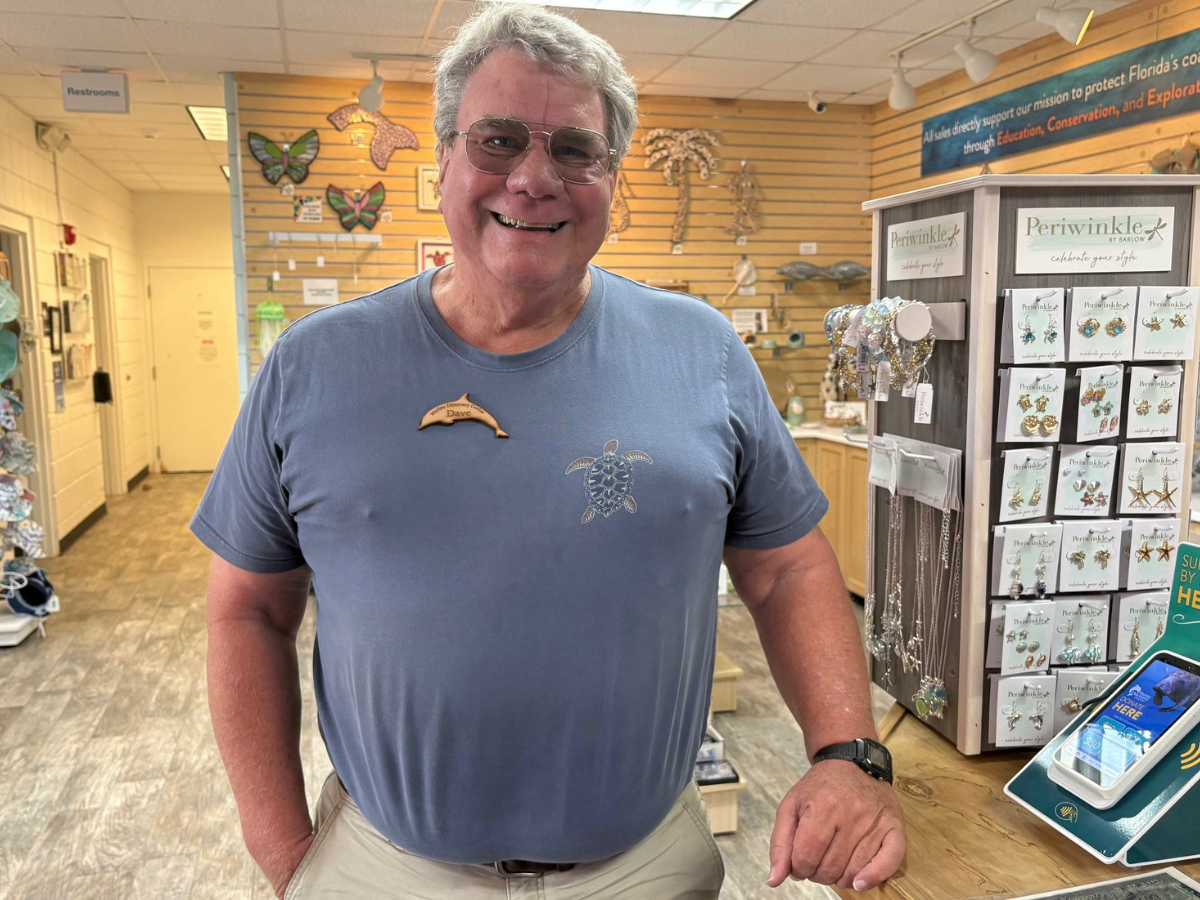
Marine Discovery Center volunteer David Weir grew up in Cleveland and spent a number of years in the Philadelphia area before settling in New Smyrna Beach.
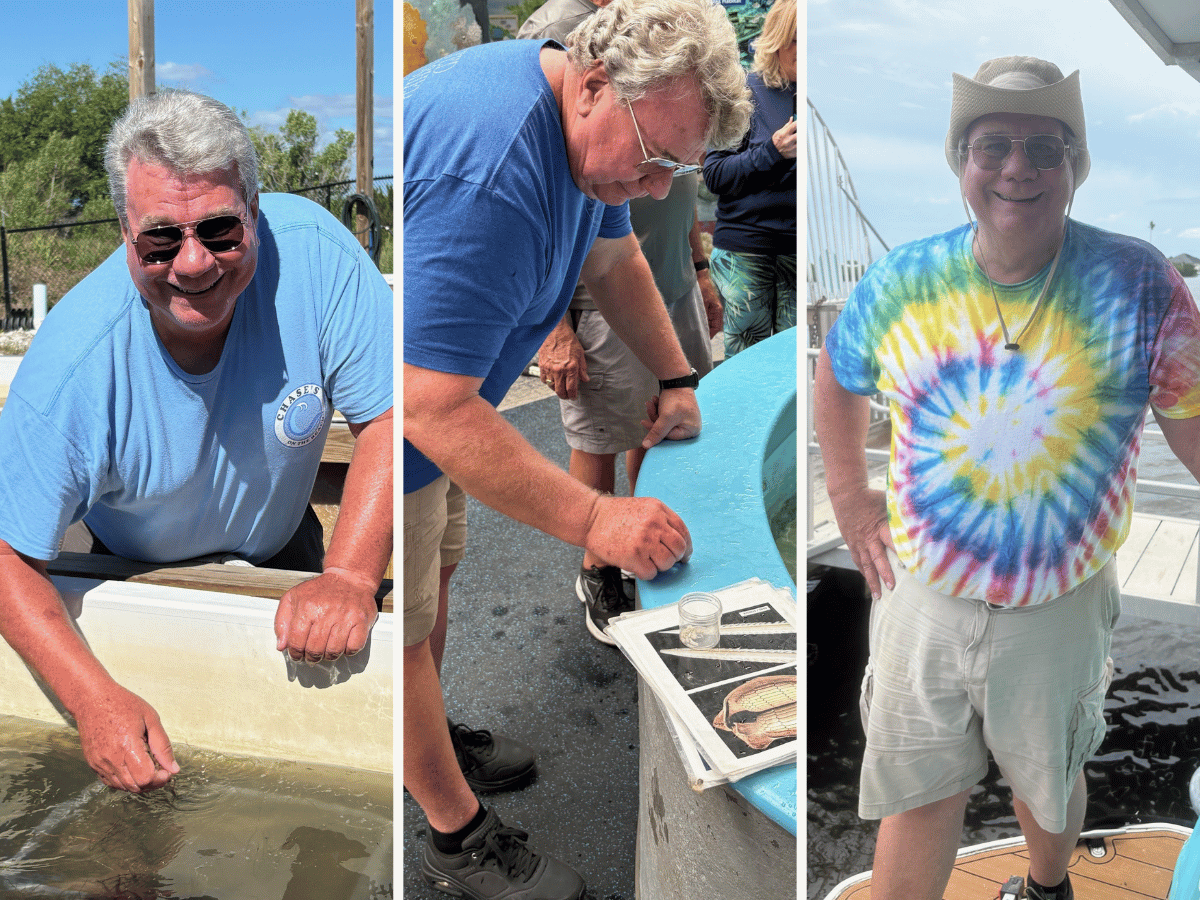
A true “fix-it” kind of guy, David has made himself invaluable at MDC, volunteering with POSH workshops, where he has helped shovel oyster shells, mix cement, and construct the POSH shoreline restoration units. He also has helped maintain the seagrass nursery, cleaning tanks, cleaning algae off seagrass blades, and fixing pipes.
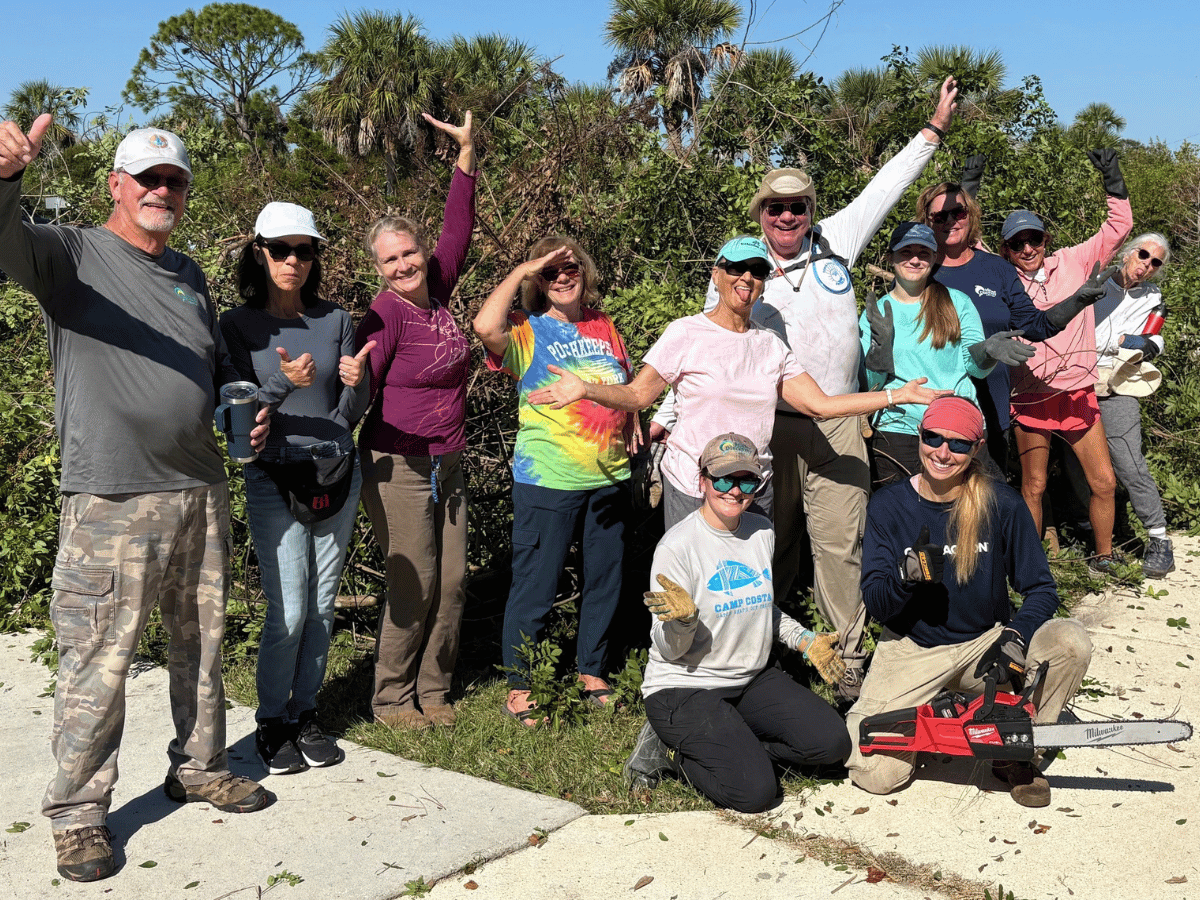
In addition, he has pitched in to help the education team prepare for programs and MDC’s Halloween event in October and helped rebuild the kayak corral. As if that were not enough, David also volunteers at the Welcome Desk and has even helped park cars at large MDC events.
An admitted lifetime learner, David is also active in MDC’s Forever Explorers program for adults and has taken the Coastal Systems class in the Florida Master Naturalist Program. When asked about David, one MDC staff member replied, “He’s just wonderful. He helps in so many ways.” Learn more about David in MDC’s Volunteer Spotlight interview with staff writer Lisa D. Mickey:
Did you go to engineering school?
Well, I started doing drafting in the eighth grade and figured out that was something I really wanted to get into. I did it through high school and then I took trade and industrial drafting in the 11th and 12th grade. I was actually working for pay during the last half of my senior year. So, back when I graduated in 1977, nobody wanted a degree. They wanted experience and I had it.
How did you officially join the work force?
I came down to Orlando with a friend and he was setting me up to get a design job, but that fell through. I actually got a job at Disney training people how to run the attractions in Fantasyland. That has nothing to do with drafting. I had to run the attractions and keep tabs on all their books.
That’s not what you signed up for, but did you enjoy it?
While I was teaching all of that, I met my future wife. Lynn transferred in to drive the monorail trains. So, we met at Disney World between Snow White, Great Adventure, Mr. Toad’s Wild Ride and Fantasyland. And then she transferred into Operations and came over to Fantasyland. We got married at the end of 1979.
It must have been fun working at Disney amid all of the costumed characters.
Yeah, we called the people who worked as characters the “zoo crew.” I was good friends with a couple of the Mickeys and a couple of the Minnies.
When did you leave Disney to return to drafting and design?
Lynn’s father worked at the educational computer corporation where I tried to work originally. He helped me get an interview. They hired me, but before they let me do design work, I started working in the machine shop to learn how to fabricate parts. I did that for six months and then for the next six months, they put me on the assembly line. They said once I knew how the parts were made and how to put them together, I would have a better idea of how everything works when I design components and assemblies. I’m really grateful for that experience. You have to remember this was long before computers, so everything was hand-drawn back then. Design drafting was an art and you had to think of everything in three-dimensional design and be able to put it on paper in 2D.
Did that lead to other things?
I stayed with them for a good while, then I moved into design work for missile systems, working on two-dimensional panel trainers. In the late 1980s, I was doing a lot of Department of Defense work in Orlando before the work dried up. I found temporary work in Baltimore and around Washington, D.C. For almost a year and a half, I worked up in that area, while my wife and daughter, Mariah, were still living in our home in Ocoee. Every two or three weekends, I would leave work on Friday at 5 p.m. and drive straight through to Ocoee, spend Saturday night and Sunday morning with them, and get back in the car and drive straight through to Baltimore for work on Monday morning.
Was that defense work?
Yes, I was designing training equipment for F-14s, F-16s, Grumman A-6 Intruders and UH-60 Black Hawk helicopters, but then I got into commercial design and worked on the original pulse oximeter that doctors use on your fingertips to measure blood oxygen. I also worked with Cadillac on the original design of its noise cancellation systems, and then I worked for another company, designing manufacturing equipment for semi-conductor chips. I came up with one of my patents there because somebody said I couldn’t do it. That’s a challenge I always take.
You have a patent?
I have three patents. One is with fusion systems. We saved the company millions of dollars a year and it’s still being used today.
Did you stay in defense work?
I went from there into orbital sciences, working on a couple of things for launch vehicles and rockets and ended up in an applied physics lab in Laurel, Maryland that was connected with Johns Hopkins University. I worked on huge commercial satellites.
Did you have a top-security clearance?
For some of that stuff, yes, I had the highest clearance they had. Everybody had it at the space department. I spent 23 years with them and retired there. I moved the family to Hanover, Pa., and we lived there for almost 30 years. My daughter is now 43 and she has two kids – my grandsons.
When did you move to Florida?
Lynn had heart surgery in 2012. Her mother was having health problems, so after Lynn recovered from her surgery, she went to Orlando to help her mom and was there for almost nine years. I would either fly down there or fly her up to Pennsylvania
And you were married for how long?
For 44 years. Lynn had some health issues that popped up, and then one Friday night around 11:15 p.m., I took her to the New Smyrna Beach emergency room. She officially passed away at 5:15 Saturday morning on August 5. They found that her heart was three times the size it was supposed to be. She had never been referred to a doctor about her heart. I have a 26-page autopsy report that indicated something like this does not happen quickly. I handed that report to a number of the doctors, and I was like, “How did you miss this? I just want you to look at this, read it over, and try not to miss this with somebody else.” To sue is not going to bring Lynn back. She’s been gone for three years now.
Were you still working when you lost your wife?
Yes. One of the spacecrafts that I had been working on for the last six years is still in testing. I built and designed the entire upper top deck, the entire RF system [Radio Frequency system] with all the mechanisms and antennas. It’s called Dragonfly. Think of a drone the size of a Mini Cooper. It’s going to Saturn’s moon Titan and around Saturn. And if it launches on time in 2028, it will not start its mission until 2034. I have helped with a lot of other ones, such as IMAP [Interstellar Mapping and Acceleration Probe, which maps the boundaries of the heliosphere]. I love the work, but I was averaging 70 to 80-hour weeks, sitting in front of a computer screen at home. I worked a lot after Lynn passed. It was a crutch at first, but by that second year, I knew I had to get out of there for my own health. Lynn and I had been to Marine Discovery Center, so I started volunteering there.
What was the first thing you did at MDC?
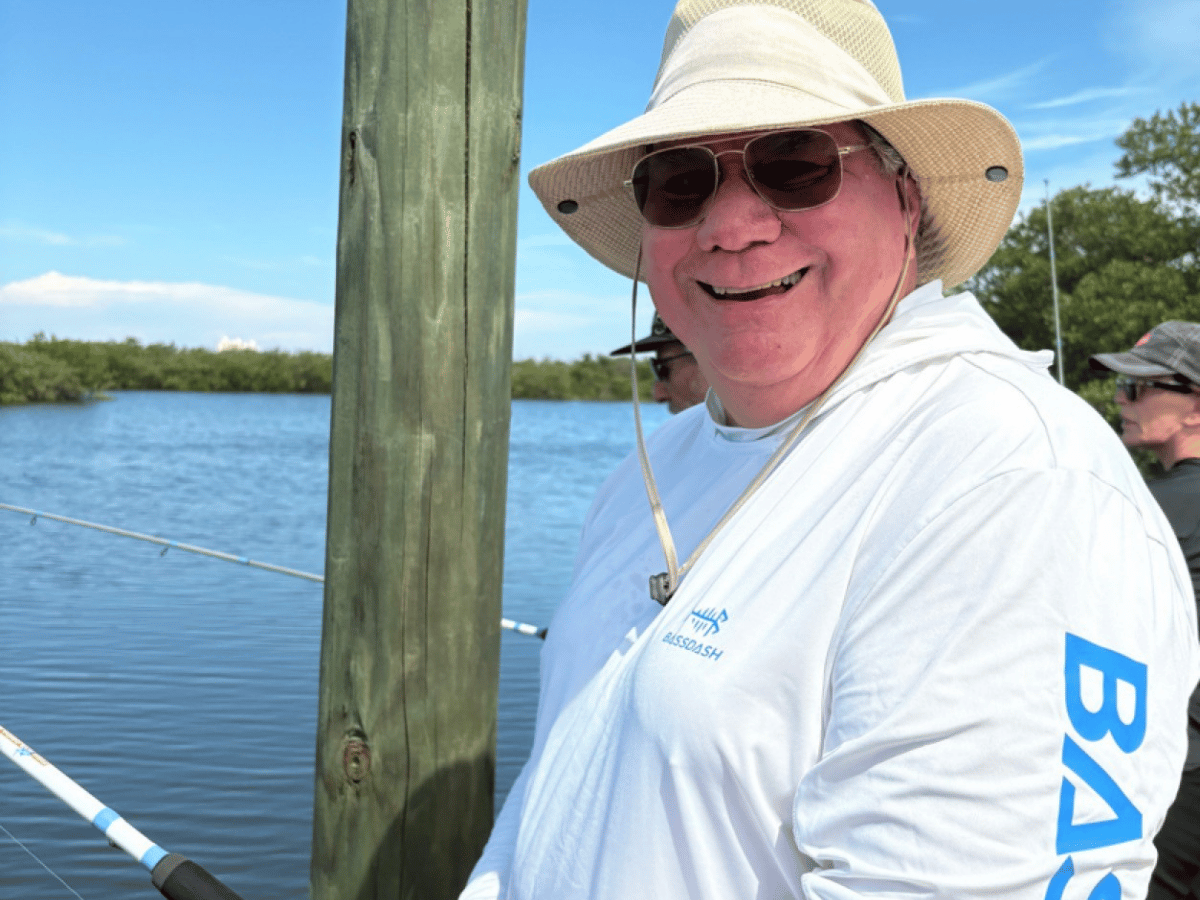
Last year, I started working with the sea grass tanks and then the POSH oyster units and helping on the S.W.A.T team with on-campus yard maintenance. I just recently started helping in the Welcome Center and also volunteering in the boutique at Coronado Methodist and with Friends of Canaveral. I wanted to be around folks.
Has it been helpful?
Very much. And I’ve enjoyed doing a lot of the Forever Explorers activities. There’s no shortage of things to do. I’m really hoping to help with MDC’s horseshoe crab monitoring program. I love to learn and there are many opportunities to do that at MDC. That why I took the Coastal Systems class in the Florida Master Naturalist Program.
You get rave reviews from MDC’s Conservation team for all of your help and ability to fix things!
Well, I can swing that rubber mallet a lot harder than some people. I don’t mind cleaning the seagrass tanks and cleaning the blades of the grass. I enjoy helping and being around other people. I’ve always been a people person.
At MDC’s recent Tide to Table event, you ended up parking cars and redirecting people trying to park in MDC’s parking lot.
I had to chase away a wedding party, but I worked with them and got them parked in other areas. They had people running them back and forth in golf carts. And they even said thanks for working with them.
Has there been a highlight so far at MDC?
Believe it or not, probably the Forever Explorers. It has offered some of my most enjoyable times with the group that goes to these activities, while getting out to visit some other areas.
How did you end up in New Smyrna Beach?
When Lynn was growing up, she used to come to New Smyrna often. Years later, we found a house here.
And then, as I learned more things while living here, I would ask, “What are the things that are jeopardizing the health of the environment?” And now, “What’s going on with the environment that I am part of?” I do look at things from an engineer’s standpoint and I’m trying to help this community and learn what it is I can do to help.
Are you still working?
I’m almost 68. I wouldn’t mind actually doing what I did, but nobody will let me in now without a degree. I’m not going back to school. I have tons of experience, but now, they look for a piece of paper, which was not the case when I graduated. Over the years, I think I proved my own worth.
What have you learned at MDC?
I pick the brains of the biologists at MDC — even just to understand the seagrass with Sam [Garcia]. What are we looking at in these tanks? And we know that oceans are going be rising, so what do we do to prepare for that? The seagrass needs sunlight to survive, so is there a type of grass that might work well in deeper water? We have to think ahead. When I first started doing design drafting in engineering, I had bosses who wouldn’t give me an answer. They would tell me to go find the answer. That’s actually important because you learn to put the pieces together and figure out the steps you need to take. Understanding that has always benefitted me.
In your professional work in STEM, of what are you most proud?
Probably the coolest one was the arm for Parker Solar Probe, which is actually still working and traveling through the corona of the sun. It’s a spacecraft that has a heat shield because it gets so close to the sun. It has instruments to measure and they have so much information right now, it’ll probably take them 40 years to go through it all, but this spacecraft proved that we have solar wind.
In your volunteer work at MDC, what has been most meaningful?
Well, I’m expanding everything that I’m doing and spending time with more people. I can see how important it is to have that bond, especially around the holidays. Certain anniversaries are tough, but I’m happy about what I’ve learned, the people I’ve met and to just know that it’s going to be okay.

Follow Us!